Made by Hand · Appetizers
Easy Roasted Tomatillo Salsa (Chunky Salsa Verde)
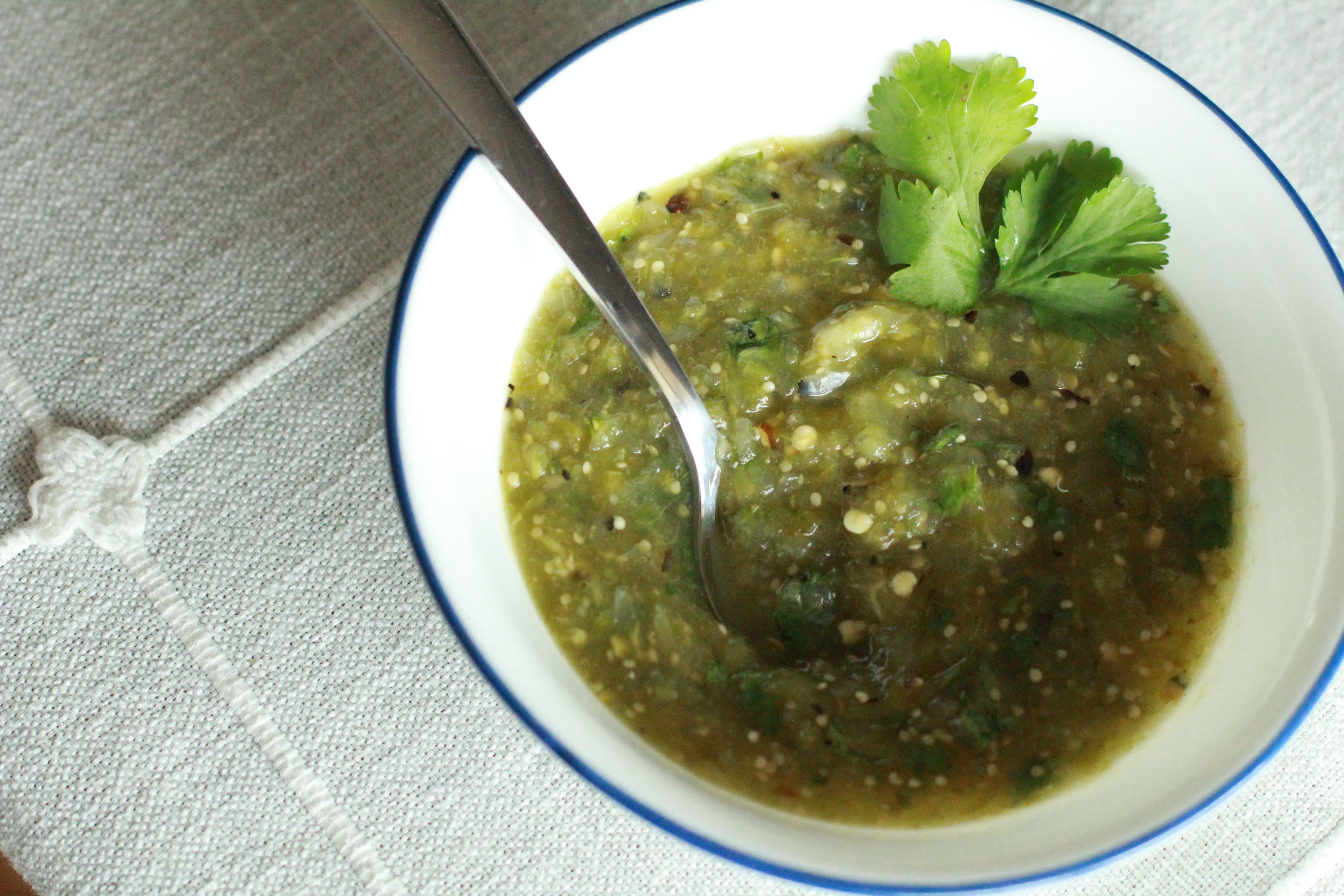
This roasted tomatillo salsa is bright, tangy, and smoky with just enough heat—and way easier than you'd think. Everything roasts on one pan, then you pulse it together. 25 minutes from start to finish, and it works on tacos, eggs, burrito bowls, or straight-up chips.

By Stephanie
Tested in my home kitchen · Updated Feb 2026
Prep
10 min
Cook
15 min
Makes
8
Difficulty
Easy
A note from my kitchen
Why this recipe stays in rotation
The first time I made tomatillo salsa from scratch, I didn't roast anything. I blended raw tomatillos with jalapeño, garlic, cilantro, and lime, and it was fine — bright and zippy, very fresh. But it wasn't the restaurant salsa verde I kept chasing. There was something missing.
The missing thing, I eventually figured out, was fire.
Why it works
What makes this recipe worth keeping
One pan, 25 minutes
roast everything together, pulse, done. Barely any cleanup
Smoky, tangy, and bright
roasting the tomatillos brings out a depth of flavor you'll never get from a jar
Works on everything
tacos, eggs, burrito bowls, grilled chicken, or just a bowl of chips
Naturally vegan, gluten-free, and low-calorie
a condiment you can feel genuinely good about
The recipe
Easy Roasted Tomatillo Salsa (Chunky Salsa Verde)
This roasted tomatillo salsa is bright, tangy, and smoky with just enough heat—and way easier than you'd think. Everything roasts on one pan, then you pulse it together. 25 minutes from start to finish, and it works on tacos, eggs, burrito bowls, or straight-up chips.
Ingredients
- 7 tomatillos, husks removed and rinsed
- 1 jalapeño
- 1/2 medium onion (or 1 small onion), peeled
- 2 garlic cloves
- 1 lime, juiced
- 1/3 cup fresh cilantro (loosely packed)
- 1 to 1 1/2 tsp salt, to taste
Method
- 1
Turn your broiler to high (or set the oven to 450°F if you don’t have a broiler setting). Line a sheet pan—foil or parchment both work.
- 2
Add tomatillos, jalapeño, and onion to the pan. Broil or roast 10–15 minutes, turning once, until blistered and charred.
- 3
Add garlic during the last 3–4 minutes so it softens without burning.
- 4
Let everything cool for 3–5 minutes. If there are big flaky black bits that look burnt, you can scrape them off—but a little char is flavor, so don’t stress it.
- 5
Roughly chop the charred vegetables.
- 6
Add chopped veggies and garlic to a blender or food processor. Pulse 5–8 times (do not over-blend).
- 7
Add lime juice and cilantro, then pulse 1–3 more times for a chunky texture.
- 8
Add salt to taste, then chill 20–30 minutes before serving for deeper flavor.
Stephanie’s notes
Keep it chunky: pulse, don’t purée. For milder salsa, remove jalapeño seeds and membrane. Too tart? Add a pinch of sugar or a little extra onion. Too thick? Add 1–2 tablespoons water and pulse once. Store in an airtight container in the refrigerator up to 5 days, or freeze up to 2 months. You’ve got this—this recipe is very forgiving. Nutritional information is approximate.
Notes from testing
The details that make the difference
Don't skip charring the tomatillos. You want actual black char spots
not just a little color, but real blistering. The char is where the smoky depth comes from. Arrange them cut-side down under a high broiler and don't move them until they're visibly charred.
Add the garlic in the last 5 minutes of broiling.
Garlic burns fast under a broiler. If you put it in with everything else, it will be acrid and bitter by the time the tomatillos are ready. Add whole unpeeled cloves in the last 5 minutes, then squeeze the roasted garlic out of the skins before blending.
Pulse, don't blend. Full blending gives you a smooth, uniform salsa
which is fine, but you lose all the texture. Pulse 8–10 times for a salsa with visible chunks of roasted tomatillo and pepper. That chunky texture is what makes it look and feel homemade (in the best way).
Salt and taste at the very end, after lime. The lime juice changes the perceived saltiness of the salsa
it makes things taste brighter and can make undersalted salsa suddenly taste right. Always add the lime juice first, then taste for salt.
Let it sit for 15 minutes before serving if you have time.
The flavors deepen and meld as the salsa rests. Made-right-before-serving salsa is good. Made 15–30 minutes ahead salsa is better. Overnight salsa is best of all.
Use it well
Make it yours, store it well
Variations
Add a roasted poblano: Char a whole poblano pepper alongside the tomatillos. Remove the skin and seeds, and add it to the blender. Poblano adds a mild, earthy smokiness without extra heat — great for serving to mixed heat-tolerance crowds.
Avocado tomatillo salsa (salsa verde cremosa): After blending, add one ripe avocado and pulse until incorporated. The result is creamy, rich, and bright — somewhere between guacamole and salsa verde. Serve immediately (the avocado will brown within a few hours).
Fire-roasted on a grill: Instead of the broiler, use tongs to char tomatillos directly over a gas burner flame, or throw them on a hot grill. The grill adds a wood-smoke flavor the broiler can't replicate — worth doing in summer when you already have the grill going.
Storage and reheating
Store in an airtight jar or container in the refrigerator for up to 5 days. The flavor actually improves over the first 24 hours as the roasted notes mellow and integrate. Stir before serving — separation is normal. Freezes beautifully: pour into ice cube trays, freeze, then transfer cubes to a zip-top bag for up to 3 months. Thaw in the fridge overnight and stir to restore texture. The frozen version is almost identical to fresh — one of the best freezer condiments there is.
Serving ideas
The obvious: tortilla chips. But beyond that, this salsa earns its place as a full cooking sauce. Spoon it over scrambled eggs in the morning. Use it as the braising liquid for chicken thighs (pour a jar over bone-in thighs in a Dutch oven, 325°F for 1.5 hours). Serve alongside the roasted pepper kraut grilled cheese for dipping. Use it in enchiladas in place of canned green sauce — genuinely no comparison. Drizzle over a bowl of black beans and rice. Add a few tablespoons to a vinaigrette for a salsa verde salad dressing. Once you have a jar of this in your fridge, you'll find reasons to put it on everything.
Reader questions
A few things you may be wondering
What are tomatillos, and where do I find them?
Tomatillos look like small green tomatoes wrapped in a papery husk. They're tangy and slightly citrusy — completely different from regular tomatoes. You'll find them in most grocery stores in the produce section or near Mexican ingredients. Peel back the husk and rinse off the sticky residue before using.
How spicy is this salsa?
That's totally up to you. The recipe includes jalapeños, and the heat level depends on how many seeds you leave in. Remove seeds for mild, leave some for medium, leave all for hot. You can also substitute serrano peppers for more heat or skip the peppers entirely.
Can I make it smoother or chunkier?
Yes — it's fully adjustable. A few short pulses in the blender gives you a chunky restaurant-style salsa verde. Blend longer for a smooth, sauce-like consistency that's great for enchiladas. Either way, the flavor is identical.
How long does it keep?
Stored in an airtight jar in the fridge, it keeps for up to 10 days. The flavor actually improves after a day or two as everything melds together. You can also freeze it in ice cube trays and use portions as needed.
Can I use canned tomatillos?
You can in a pinch, but skip the roasting step since canned tomatillos are already cooked. The flavor will be milder and less complex. Fresh is worth it here — it only takes 15 minutes under the broiler.
What's the difference between salsa verde and this chunky version?
Traditional salsa verde is typically blended smooth. This version gets just a few pulses, keeping visible pieces of charred tomatillo and pepper. That chunky texture is what makes it stand up so well as a chip dip.
Keep learning
Kitchen Journal
Roasted or raw? What heat changes in salsa verde
A closer look at how roasting changes acidity, sweetness, texture, and the flavor of tomatillos.
Read the field noteFrom Stephanie
“A recipe gets useful when it tells you what to notice—not only what to do.”Why I cook this way
What to make next
Keep cooking

Made by Hand
Easy Fermented Jalapeños Recipe (Beginner's Guide to Lacto-Fermentation)
Tangy, probiotic-rich fermented jalapeños with just salt, water, and time. No special gear needed. This beginner guide makes it completely foolproof.
Make this next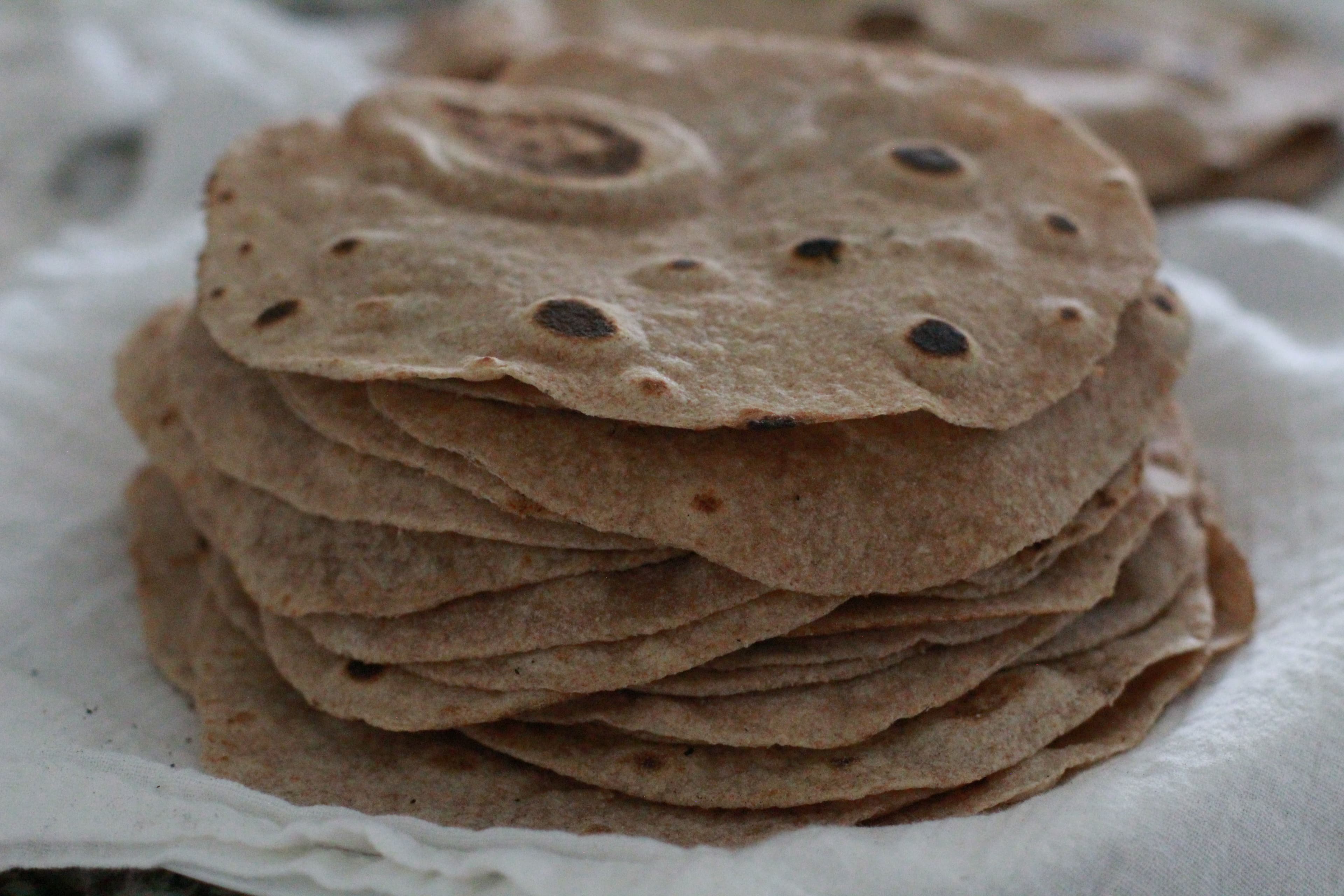
Made by Hand
Whole Wheat Tortillas with Fresh Milled Flour
Soft, pliable whole wheat tortillas made with fresh milled flour — ready in under an hour with just 5 simple ingredients. Way better than store-bought, and easier than you think.
Make this nextStay for the next experiment
A good recipe, a song, and something worth noticing.
Every other week, I’ll send one useful kitchen idea, one honest note from the process, and whatever is taking shape in the music room.
Around the table
Questions, notes, and kitchen discoveries
Tried this recipe, changed something, or ran into trouble? Share what happened so we can learn from one another.