Roasted vs. Raw Tomatillo Salsa: Which Is Better?
Learn the difference between roasted and raw tomatillo salsa verde, when to use each style, and how to choose confidently for the meal you’re making.
Ever notice how some salsa verde tastes fresh and zippy, while other versions taste deeper and smokier? It all comes down to one choice: roasting your tomatillos or not. Both are great—you just pick the version that fits dinner tonight.
Roasted tomatillo salsa with fresh chips:
Chunky texture close-up:
For the full recipe method, use this companion recipe: https://www.odetooakleaf.com/recipes/roasted-tomatillo-salsa
What Are Tomatillos?
Quick heads-up: tomatillos aren’t just unripe tomatoes. They’re their own thing—a tart little fruit wrapped in a papery husk that you peel off before cooking.
Raw tomatillos taste fresh and lively. Roasted tomatillos become sweeter, deeper, and slightly smoky after charring.
Raw Tomatillo Salsa: Fresh and Bright
Raw salsa verde is ideal when you want a vibrant, citrusy, high-acid finish. It comes together quickly and pairs especially well with lighter proteins.
Best for fish or chicken tacos
Excellent for drizzling over eggs
Perfect when you want a brighter finish
Roasted Tomatillo Salsa: Smoky and Balanced
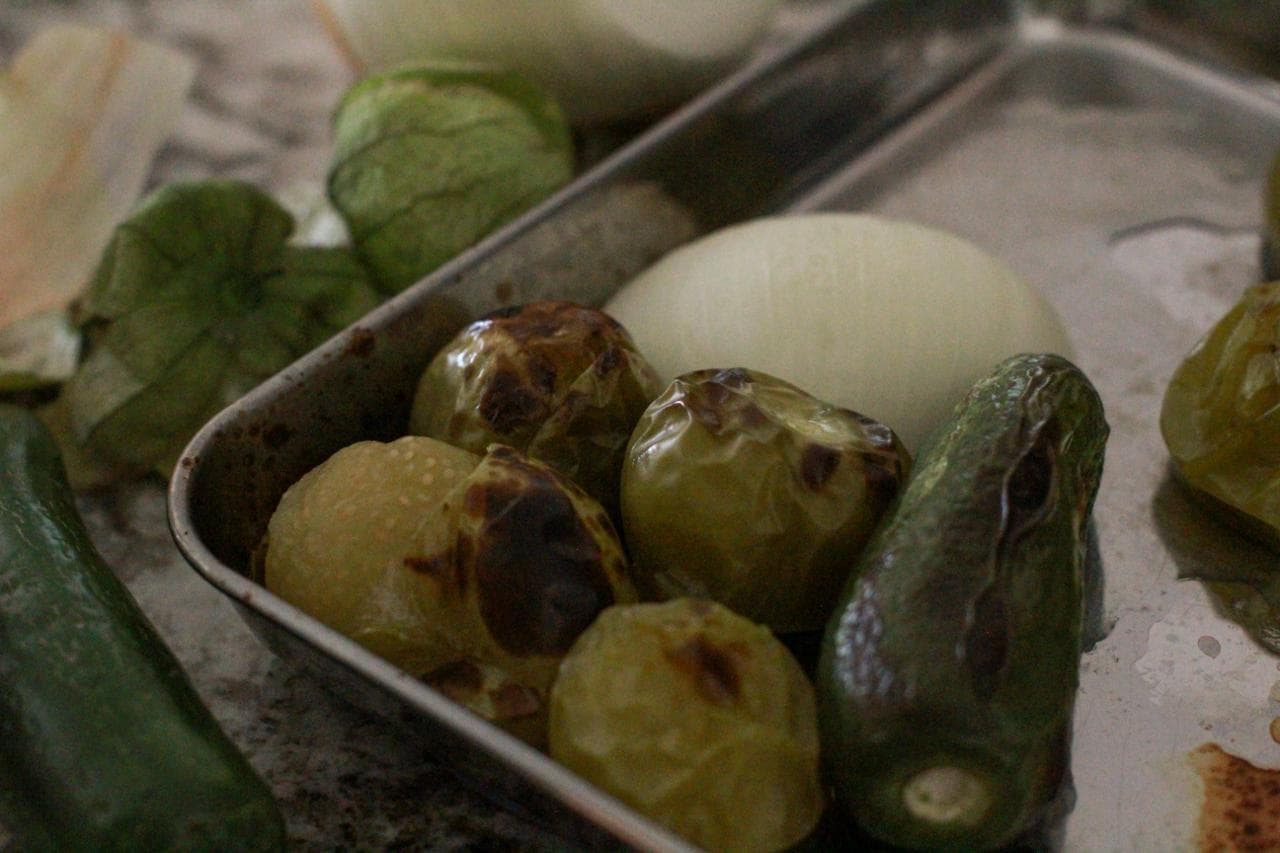
Roasting gives you deeper, richer flavor. Charred tomatillos, onion, jalapeño, and garlic make a salsa that tastes fuller and a little smoky.
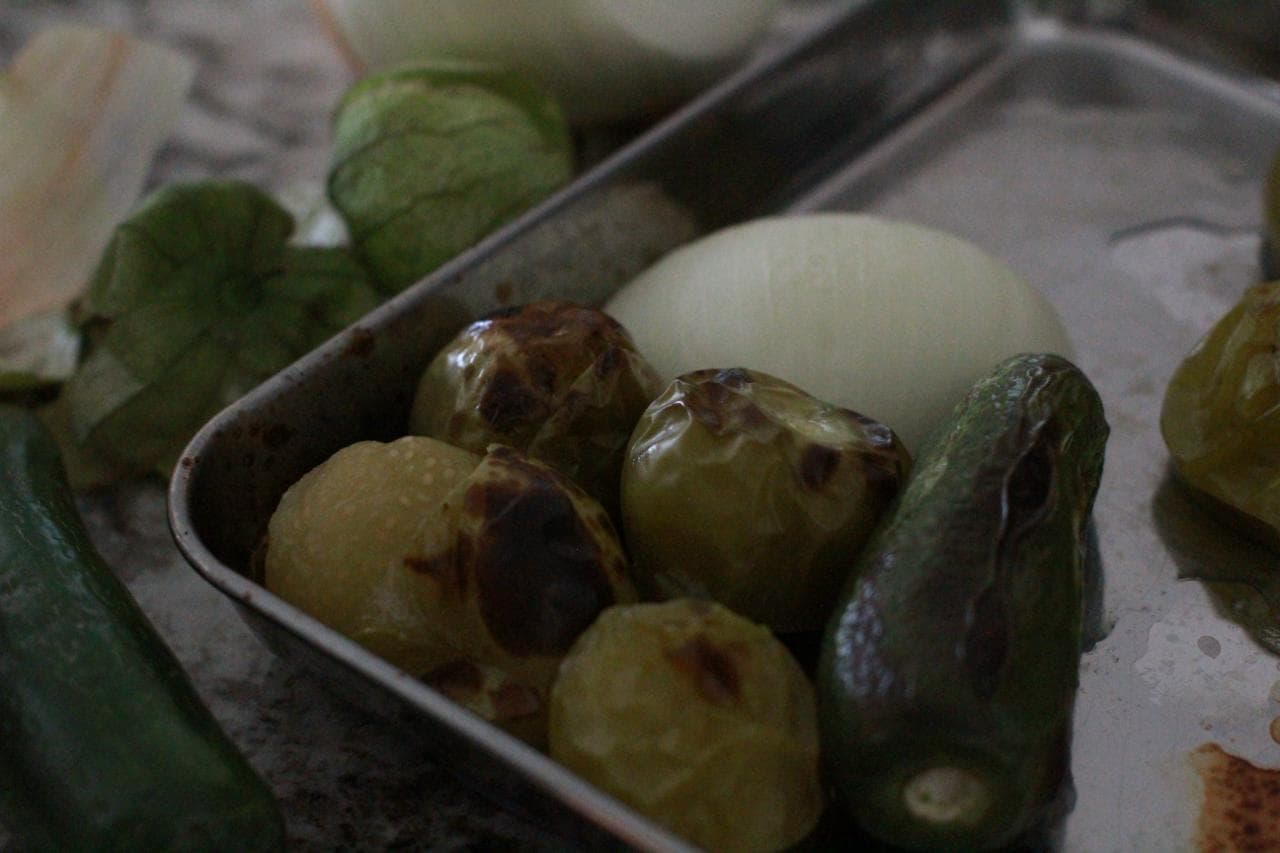
Fresh from the pan: roasted tomatillos, jalapeño, and onion.
Roasted tomatillo close-up:
This is the style most people expect in restaurant-style salsa verde for tacos, enchiladas, bowls, and chips.
Best for tacos, burrito bowls, and enchiladas
Great with chips and party platters
Holds up well in meal prep
Roasted vs. Raw: Quick Comparison
Flavor: Raw = bright/tart, Roasted = smoky/deep
Texture: Raw = thinner, Roasted = chunkier
Time: Raw ~10 minutes, Roasted ~25 minutes
Use case: Raw for freshness, Roasted for depth
There isn’t one “right” version every time—just the one that fits what you’re cooking. If you feel stuck, start with roasted. It’s the easiest crowd-pleaser.
How to Roast Tomatillos for Better Salsa
Remove husks and rinse off sticky residue
Roast or broil at high heat until blistered and charred
Add garlic near the end to prevent burning
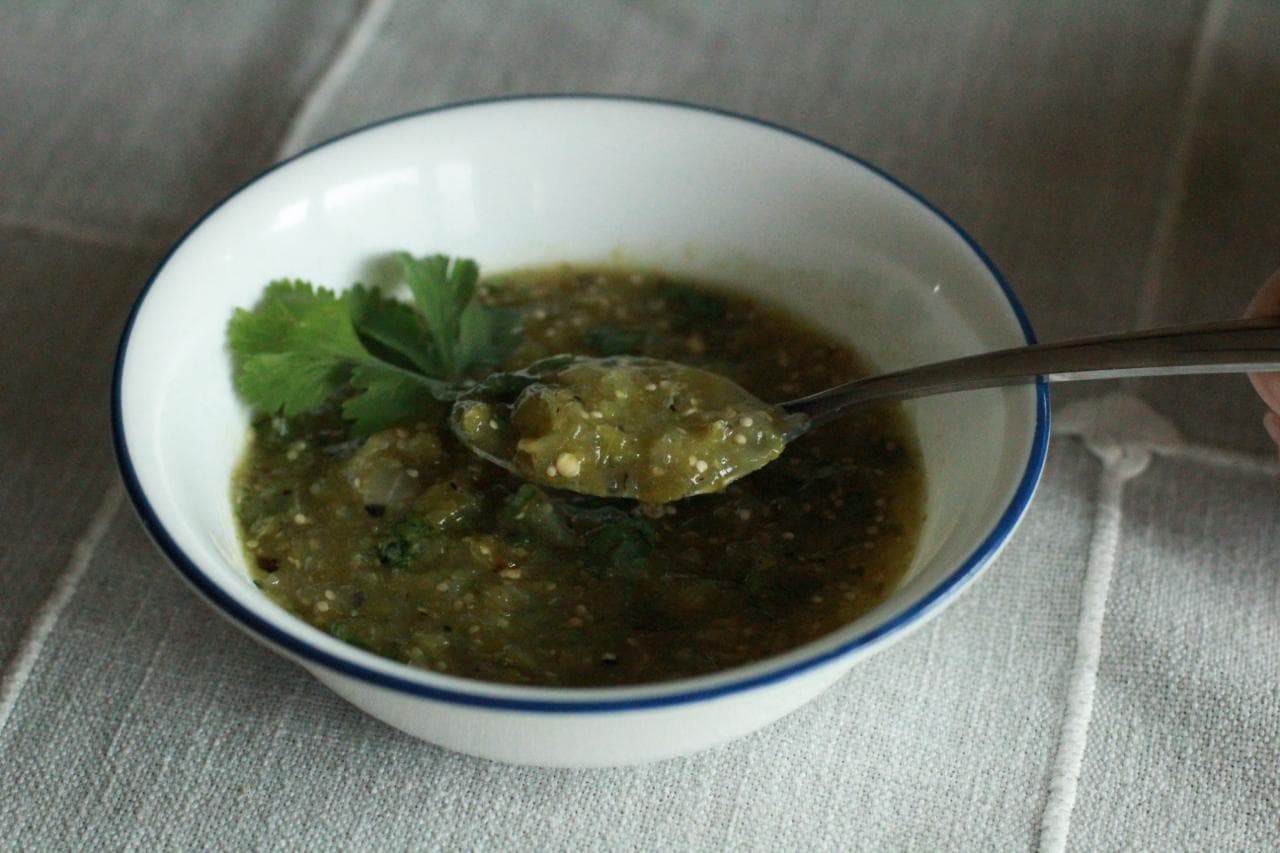
Pulse instead of fully blending for chunky texture
Finish with lime, cilantro, and salt to taste
Serving Ideas
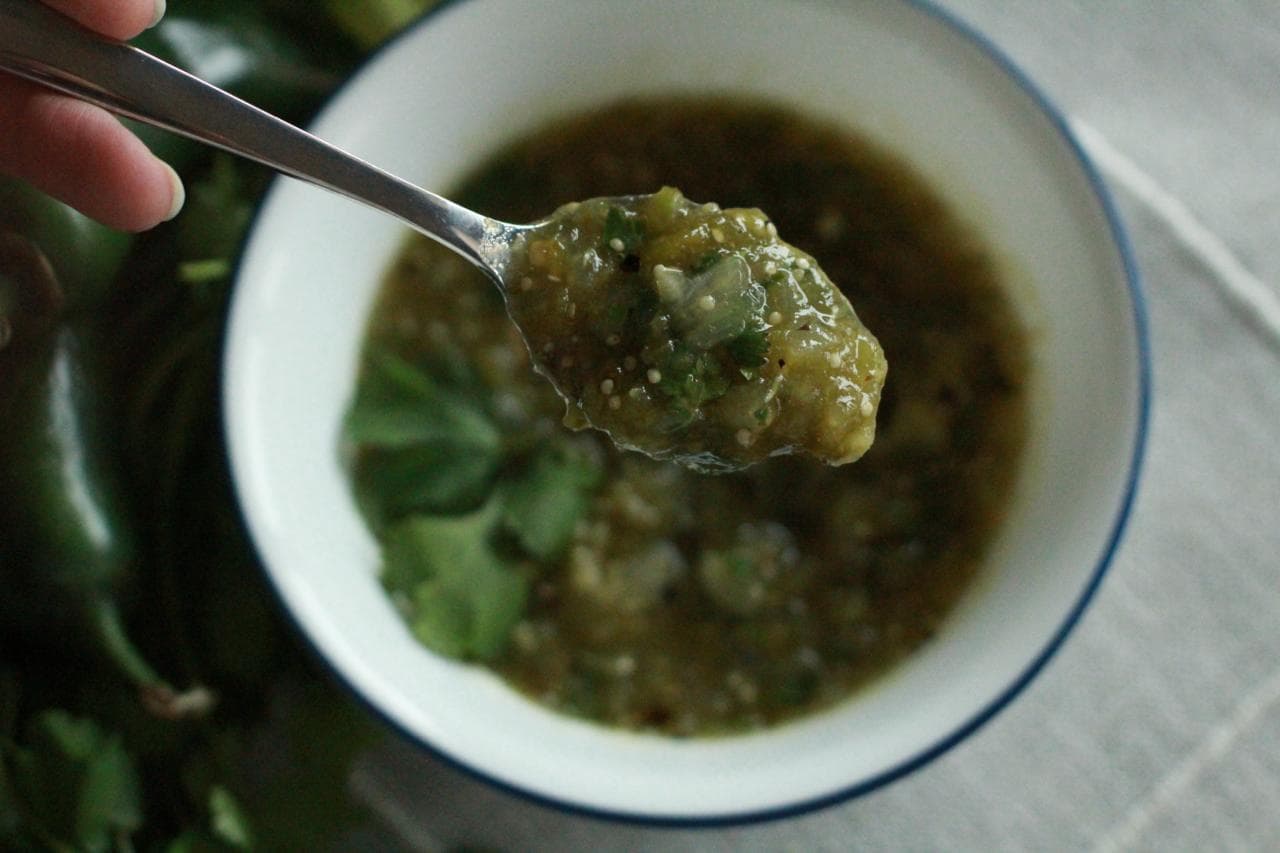
Serve roasted tomatillo salsa with tacos, eggs, grilled meats, burrito bowls, or tortilla chips. It also pairs beautifully with lacto-fermented peppers (jalapeños) for extra tang and heat.
Serving spoon shot:
Storage Tips
Store in an airtight container in the refrigerator for up to 5 days, or freeze for up to 2 months. Stir after thawing to restore texture.
Final Takeaway
Start with roasted tomatillo salsa if you want broad crowd appeal and rich flavor. Use raw salsa verde when you need freshness and brightness. Keeping both in your repertoire gives you the right sauce for every meal.
Around the table
Questions, notes, and kitchen discoveries
Tried this recipe, changed something, or ran into trouble? Share what happened so we can learn from one another.
Enjoyed this story?
Receive new recipes, useful questions, and honest notes from the working kitchen.