Made by Hand · Breads
Fresh-Milled Wheat Bread
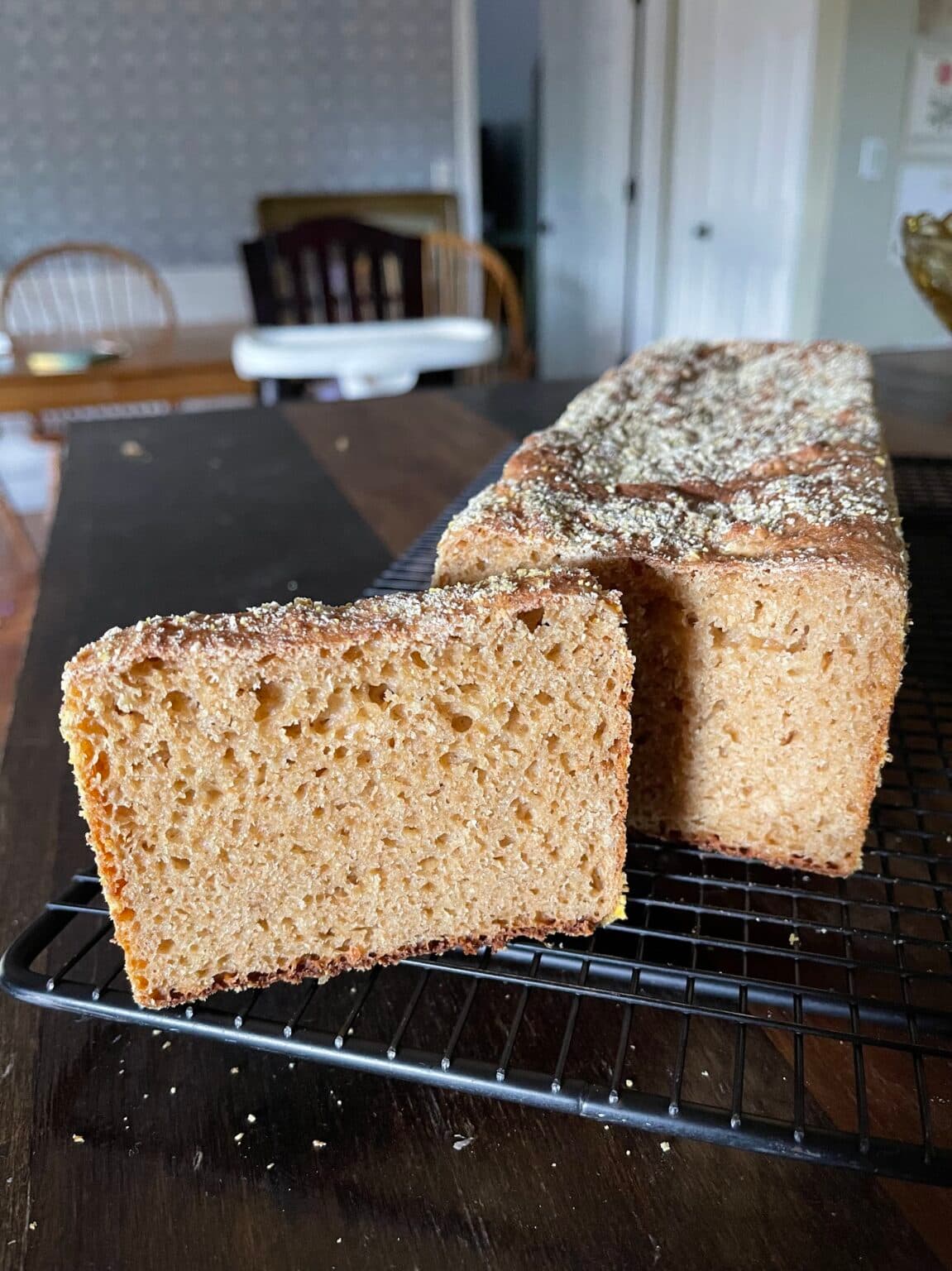
A quick and nutritious whole wheat bread made with freshly milled wheat berries. This easy batter bread requires no kneading and bakes up with a beautiful cornmeal crust.

By Stephanie
Tested in my home kitchen · Updated Feb 2026
Prep
15 min
Cook
65 min
Makes
12
Difficulty
Easy
A note from my kitchen
Why this recipe stays in rotation
Bread is the reason I got a grain mill. I'd been reading about freshly milled flour for months — the nutrition, the flavor, the difference between stone-ground and blade-milled — and finally just decided to do something about it instead of just reading about it. I ordered a Mockmill 100 and a bag of hard white wheat berries and made my first loaf.
It didn't rise quite right. It was a little dense. It tasted incredible, but it wasn't the airy sandwich bread I was used to.
Why it works
What makes this recipe worth keeping
No kneading required
this is a batter bread, which means you stir it together and it goes straight into the pan
Genuinely nutritious
fresh milled flour retains the germ and bran that store-bought flour loses during processing and storage
Beautiful crust
the cornmeal finish gives it a bakery-style crust with a gorgeous, rustic look
A great first bread
if you've been intimidated by bread baking, this one is the perfect place to start
The recipe
Fresh-Milled Wheat Bread
A quick and nutritious whole wheat bread made with freshly milled wheat berries. This easy batter bread requires no kneading and bakes up with a beautiful cornmeal crust.
Ingredients
- For the bread:
- 2 cups whole white wheat berries, freshly milled
- 1 cup whole red wheat berries, freshly milled
- 1/4 teaspoon baking soda
- 2 teaspoons salt
- 5 teaspoons instant yeast (1 tablespoon + 2 teaspoons)
- 1 tablespoon honey
- 1/4 cup water (110°F)
- 2 1/4 cups whole milk (110°F)
- For the pan:
- 1 tablespoon butter (for coating the bread pan)
- 1/8 cup whole corn kernels or cornmeal (for coating pan and topping)
Method
- 1
Mill the wheat berries and corn kernels using your grain mill. Set the freshly milled flour aside.
- 2
In a small bowl, combine the yeast with 1/4 cup warm water (110°F) and honey. Stir gently and set aside for 5-10 minutes until foamy.
- 3
In a large mixing bowl, whisk together the freshly milled wheat flour, baking soda, and salt.
- 4
Warm the milk to 110°F. Add the warm milk to the dry ingredients.
- 5
Add the activated yeast mixture to the bowl. Stir everything together with a wooden spoon until smooth. The consistency should be more like a thick batter than a traditional bread dough.
- 6
Generously butter an 8x4-inch glass bread pan. Coat the buttered pan with cornmeal, tapping out any excess.
- 7
Pour the batter into the prepared pan and smooth the top.
- 8
Cover loosely and let rise in a warm place for 45 minutes or less, until the dough has doubled in size.
- 9
While the dough rises, preheat your oven to 425°F (220°C).
- 10
Once risen, gently sprinkle cornmeal over the top of the dough. Be careful not to deflate it.
- 11
Bake for 15-20 minutes until golden brown. The internal temperature should read 190-205°F and the bread should sound hollow when tapped.
- 12
Remove from oven and let cool in the pan for 5 minutes, then turn out onto a wire rack to cool completely before slicing.
Stephanie’s notes
This is a batter bread, not a traditional kneaded bread, so do not be surprised by the loose consistency. The mixture should be thick but pourable. For best results, use freshly milled flour within a few hours of grinding to preserve maximum nutrition and flavor.
Notes from testing
The details that make the difference
Measure your flour by weight, not volume.
Freshly milled flour is lighter and fluffier than store-bought whole wheat, so volume measurements are inconsistent. A kitchen scale and weighing in grams eliminates the variability that makes baking frustrating.
Use more liquid than you think you need. Fresh-milled whole wheat flour absorbs significantly more moisture than commercial flour. Start with the recipe amount, but expect to add 2–4 tablespoons more. The batter for a batter bread should be thick but pourable
not stiff.
Check internal temperature, not time.
Your bread is done at 190–200°F internal temperature. Pull it at 195°F for a perfect loaf. Time-based baking is unreliable because every kitchen, oven, and batch of flour is slightly different. A $10 instant-read thermometer solves this forever.
Grease your pan well and use glass or light-colored metal.
Dark pans conduct heat more aggressively and can over-brown the crust before the interior sets. A Pyrex glass loaf pan lets you see exactly what's happening on the sides and bottom as it bakes.
Mill flour right before you bake.
Freshly milled flour starts oxidizing within hours of milling. If you mill the night before, store the flour in an airtight container in the fridge or freezer. For best flavor and maximum nutrition, mill and bake the same day.
Use it well
Make it yours, store it well
Variations
Hard red wheat: Swap hard white wheat berries for hard red wheat. The flavor is nuttier and earthier, with a slightly darker crumb. Some people find it stronger than they like at first; if so, start with a 50/50 blend of hard red and hard white wheat before going all hard red.
Add seeds or inclusions: Fold in 2 tablespoons of flaxseeds, sunflower seeds, or sesame seeds before baking for extra texture and nutrition. Sesame seeds on top (pressed lightly into the batter before baking) give the crust a nice toasty flavor and look beautiful.
Use store-bought whole wheat flour to start: If you don't have a grain mill yet, King Arthur White Whole Wheat Flour is the closest commercial equivalent and works in this recipe. The flavor won't be as complex, but the ratios will be the same. It's a good way to test the recipe before committing to fresh-milled.
Storage and reheating
Cool completely on a wire rack before slicing — at least 1 hour. Whole grain bread holds moisture differently than white bread; slicing too early makes it gummy. Once cooled, store in a bread bag or airtight container at room temperature for 3–4 days, or refrigerate for up to 1 week. For longer storage, slice the whole loaf, wrap slices in pairs in plastic wrap, and freeze for up to 3 months. Toast straight from frozen — no thawing needed.
Serving ideas
This bread makes a genuinely excellent sandwich — the nutty whole grain flavor holds up to strong fillings like sharp cheddar, turkey, and mustard, or avocado with flaky salt. Toast it and spread with brown sugar cinnamon butter for a breakfast that tastes like it took more effort than it did. Use thick slices for French toast — the whole grain soaks up the egg mixture beautifully. Cube day-old bread and toss in olive oil and garlic for homemade croutons. Or just eat it warm with good butter. That's honestly what we do most mornings.
Reader questions
A few things you may be wondering
What are wheat berries, and where do I buy them?
Wheat berries are the whole, unprocessed kernel of wheat — bran, germ, and endosperm intact. You mill them into flour right before baking. They're available at health food stores, Azure Standard, online (Breadtopia, Wheat Montana), or sometimes in bulk bins at co-ops. Store them in a sealed container in a cool, dry place and they keep for years.
Do I need a grain mill?
Yes, to use fresh milled flour — but a grain mill is more accessible than you'd think. Entry-level options like the Mockmill 100 are affordable and last for decades. If you don't have one yet, you can use store-bought whole wheat flour and still get a great result.
Why is there cornmeal in this recipe?
Cornmeal on the bottom of the pan acts as a barrier between the dough and the pan, adding a crispy, golden crust texture. It's a classic technique and one of the things that makes this loaf look and feel special. You can substitute parchment paper if needed.
My bread is dense — what went wrong?
Dense bread usually means the yeast wasn't active (check it first by proofing in warm water with a pinch of sugar — it should foam in 10 minutes), the water was too hot and killed the yeast, or the bread didn't rise long enough. Fresh milled flour can be thirstier than processed flour, so a longer rise time is sometimes needed.
How do I know when it's fully baked?
The internal temperature should reach 190–200°F on an instant-read thermometer. If you don't have one, tap the bottom — a hollow thump means it's done. The crust should be golden-brown and the loaf should pull slightly from the sides of the pan.
Can I add mix-ins like seeds or nuts?
Yes! Sunflower seeds, sesame, flax, rolled oats, or pumpkin seeds all work beautifully. Stir them into the batter or press them into the top before baking for a seed-crusted look.
Keep learning
How it works
Using fresh-milled flour without guessing
Use the flour converter, then learn how freshly milled grain behaves in familiar recipes.
Open the flour guideFrom Stephanie
“A recipe gets useful when it tells you what to notice—not only what to do.”Why I cook this way
What to make next
Keep cooking
Made by Hand
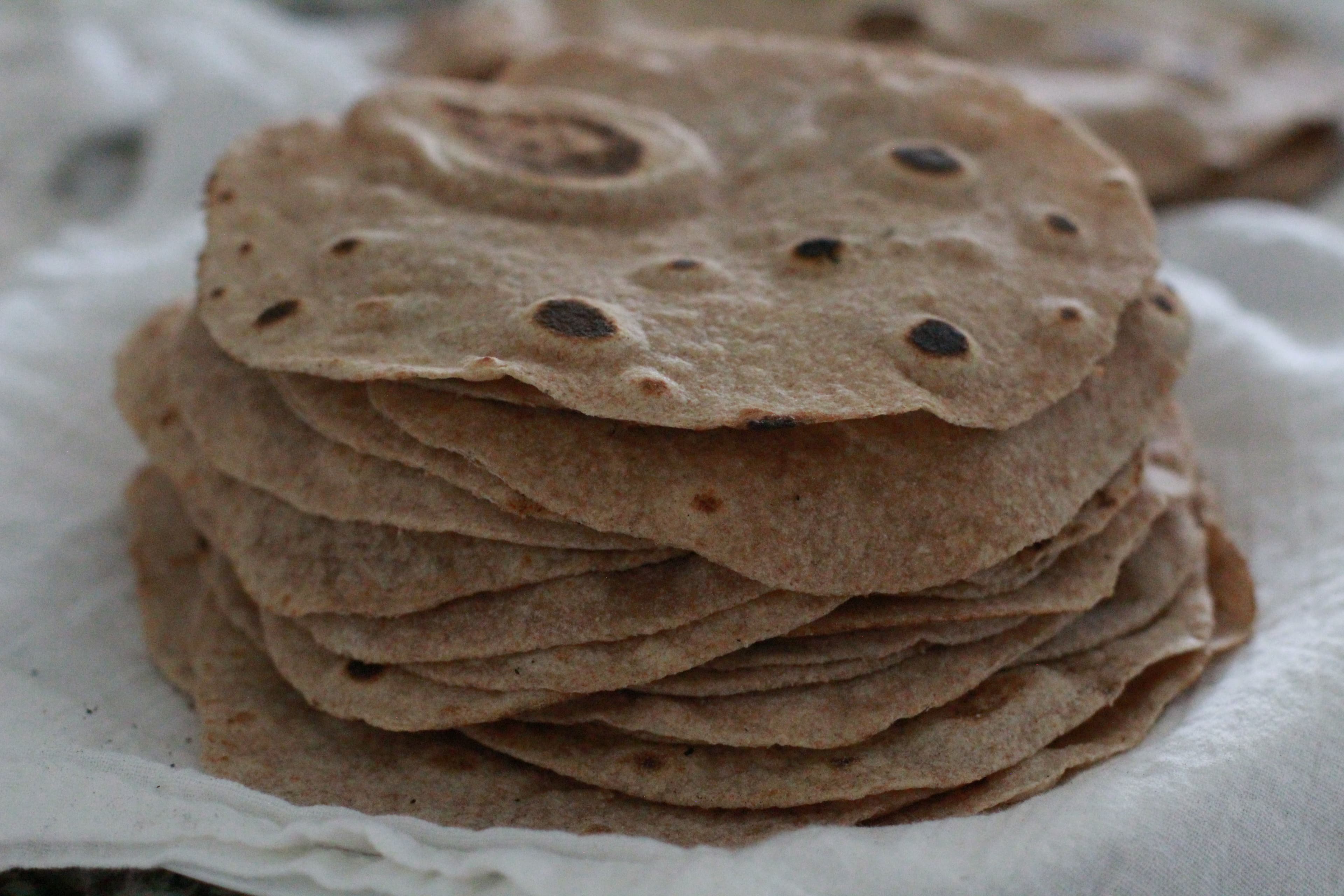
Whole Wheat Tortillas with Fresh Milled Flour
Soft, pliable whole wheat tortillas made with fresh milled flour — ready in under an hour with just 5 simple ingredients. Way better than store-bought, and easier than you think.
Make this next
Made by Hand
Fresh Milled Flour Pancakes (Fluffy Whole Wheat!)
Fluffy, wholesome pancakes made with fresh milled flour — a 50/50 blend of hard and soft white wheat that gives you the perfect tender crumb. Ready in 20 minutes, naturally whole grain, and better than any box mix.
Make this nextStay for the next experiment
A good recipe, a song, and something worth noticing.
Every other week, I’ll send one useful kitchen idea, one honest note from the process, and whatever is taking shape in the music room.
Around the table
Questions, notes, and kitchen discoveries
Tried this recipe, changed something, or ran into trouble? Share what happened so we can learn from one another.