How daily Bible reading, praying throughout the day, and fasting have strengthened my faith in God and helped me find peace in a busy season of life.
The world we live in is filled with uncertainty. It’s easy to get swept away by all the different voices and fear filled narratives. I’m not saying those perspectives aren’t valid, but listening to them constantly can have a way of stealing our peace.
Even aside from current circumstances, my tendency is to be anxious about just about everything.
These are a few changes I felt called to make in my life that have strengthened my faith in God. They haven’t removed the uncertainty from my life, but they’ve helped me trust Him in it. They’ve also made a significant difference in my mental health and brought more peace into our home. That peace is something I deeply cherish.
I want our home to feel like a safe place for my husband, myself, our children, and the people we’re blessed to share it with. My house doesn’t always feel peaceful. But these practices have helped me move from constant anxiety and worry toward feeling grounded much more of the time. My mood significantly affects our household.
I’m sure this will continue to change and grow as I do. For now, it’s been a starting point for changing my life and our home—from a place that feels chaotic and cluttered toward slower rhythms and calm, restorative evenings.
For me, that has started with three practices: reading a chapter from my physical Bible before doing anything else, praying throughout the day, and fasting.
1. Refreshing my mind: one chapter before anything else
In my teenage years, I would definitely have considered myself a believer. But I struggled to read my Bible consistently.
I felt like if I was going to read it, I needed to really study it. Get out a concordance. Find out what the words meant in their original languages. Understand the cultural context of the setting and the people.
There is value in all of that. I still believe that. But I had made it a requirement for every time I opened my Bible, and it felt overwhelming. The thought of everything I needed to do kept me from doing the simplest thing: reading.
Then I had children. With less and less free time, I read even less.
Life has also held a lot of trials, personally and around me. My own health struggles, my husband's chronic illness, my daughter's illness. Job losses. Relational losses. And on and on.
The older I get, the more I realize the importance of doing small things that, over time, add up to large changes.
What one chapter a day looks like in my home
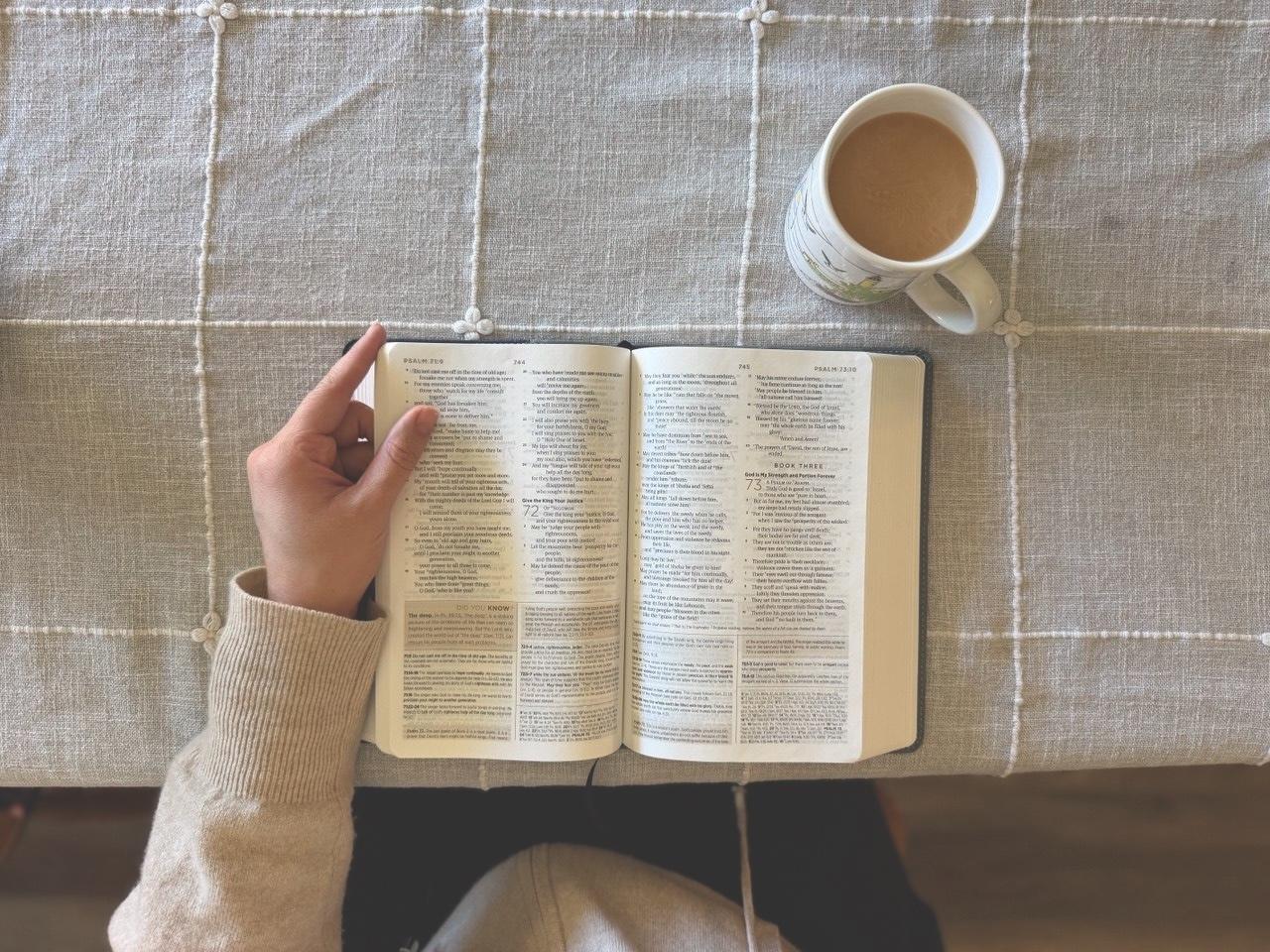
Before doing anything else, I read one chapter from my physical Bible. No phone for me—I get distracted too easily.
It also keeps me from looking at a screen first thing in the morning. It’s easy to start scrolling before I’m even fully awake and get pulled into the news, everyone’s opinions, and things to worry about. I want to start my morning with Scripture instead of doomscrolling. Those other things can wait.
If you find it easy to stay on task while reading on your phone, feel free to use it. Another option is an audio Bible. Play a chapter while you drink your coffee or make breakfast, then set the phone down. Listen to what’s being read instead of scrolling through something else. It doesn’t have to mean sitting in a perfectly quiet house.
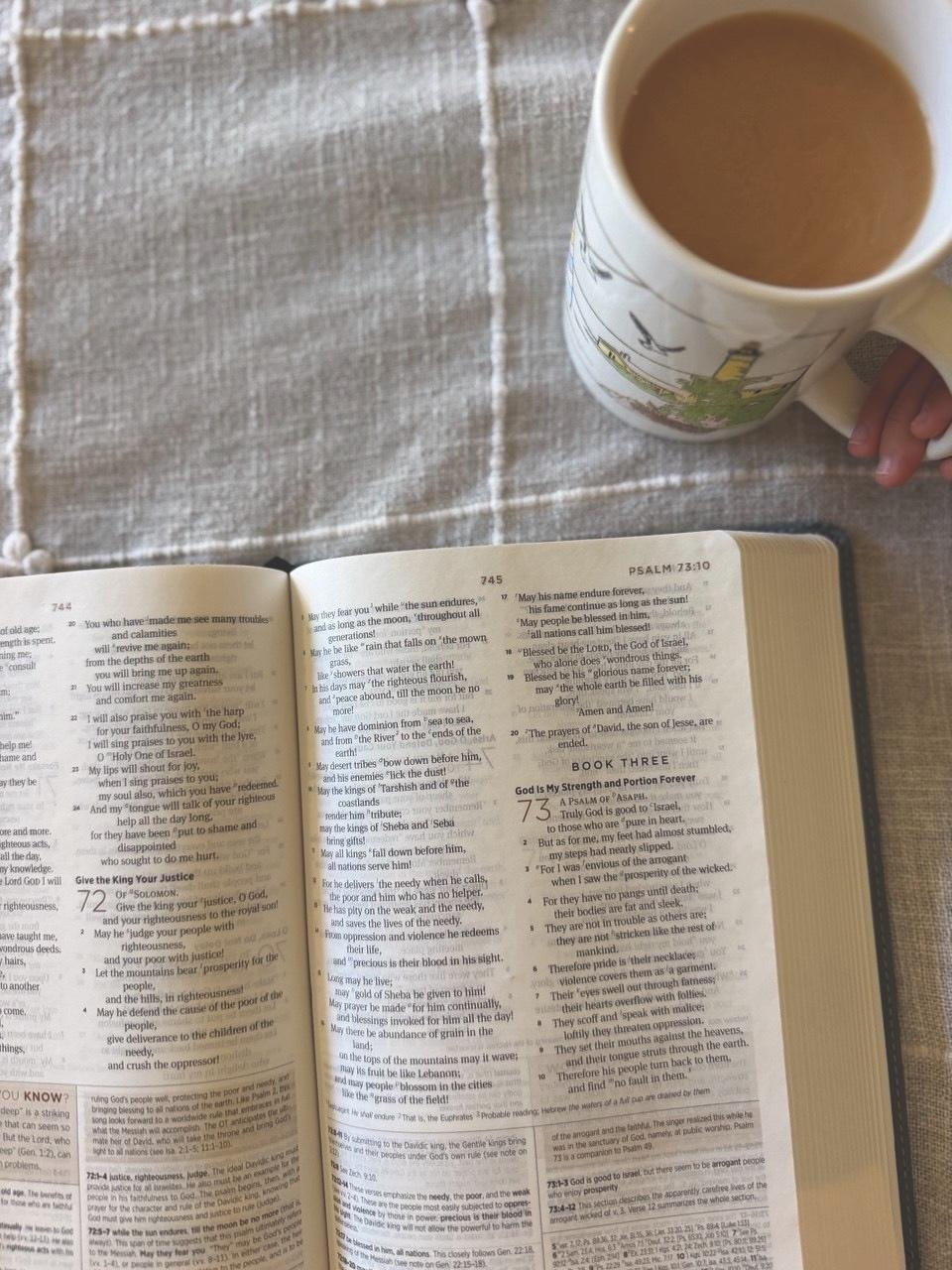
Deeper study is something I aspire to work into my week regularly. But in this season of life, I don’t have the extra bandwidth to spend two hours studying each morning. I can show up with what I have and let God work through that.
Thankfully, He is gracious and loving. We all fall short of the glory of God, as Romans 3:23 reminds us, and He loves us still. That isn’t an excuse to do less. It’s motivation to make room for small moments that bring us closer to Him—to be faithful with the little I do have and trust Him to work through what I give Him.
I’ve been reading one chapter every day for almost six months now, and I’m amazed at how refreshed my soul feels after reading in the morning. I’m in the Old Testament, and it’s full of hard concepts and stories. I don’t understand everything I read. But even in chapters I’ve read so many times throughout my life, God is giving me new insights.
My mornings are very full. Getting myself and my children ready. Breakfast, packing lunches. Socks, shoes, uniforms, coats… homework. No matter how much I prepare beforehand, there are mornings when everything seems to be falling apart.
But I find myself more able to stay calm and trust the Lord with those mornings when I’ve started by spending time in His Word. It hasn’t made our mornings perfect. It has changed how I move through them.
How long does it take to read the Bible one chapter a day?
The 66-book Protestant Bible contains 1,189 chapters. At one chapter every day, that's 1,189 days, or about three years and three months. Bibles with additional books take longer, and missed days naturally extend the timeline.
But I'm not really in a hurry.
Lord willing, I may have another fifty years or more to read my Bible. At that pace, fifty years would leave time for about fifteen complete readings and part of a sixteenth.
I like to think that by then I'll be an old, and hopefully much wiser, woman. Still reading. Still learning.
I don't need to make this into a race. I want it to be something I keep doing.
If you’ve struggled to read consistently, start with one chapter. Read or listen, and if you miss a day, pick up where you left off. You don’t have to make it complicated to begin, and I urge you to reject the negative internal dialog that might go something like this,
“You already can’t stick with it, so you should just quit now.”
“You don’t even understand what you are reading, so you should just do something else instead.”
“This is boring, and I’m not even getting anything out of this reading, so I should just do something that makes me feel God more.”
These are all thoughts to keep you from being transformed by God’s truth. And the more you shut those thoughts down, the easier it will be to get to the reading, and the more God’s Word will come to LIFE.
It may not happen the first day or week, but trust me, it will happen.
2. Praying the hours
Praying the hours has been unbelievably impactful in my life. My mental health, my emotional health—all of those things affect my whole life. This practice has been a way for me to apply these words:
“Be anxious for nothing, but in everything by prayer and supplication, with thanksgiving, let your requests be made known to God; and the peace of God, which surpasses all understanding, will guard your hearts and minds through Christ Jesus.” — Philippians 4:6–7, NKJV
My family has been through some very hard trials over the past ten years, especially in the past three. I’ve mourned many things. There have been moments of doubt and wrestling when I felt like I was in the pits of despair, like life would just end for me. It feels dramatic writing that, but it’s true.
In those seasons, I wasn’t reading a chapter of my Bible every day. But I was praying the hours on Mondays, because those were my hardest days. That gradually carried over into the other days that were hard, not just Mondays.
It didn’t fix all my problems, but it gave me hope. God showed me He was there with me through answers to little prayers—things I sometimes felt silly even praying about. I started praying about seemingly insignificant things to see if God would hear me. And boy, did He.
I started keeping a journal of those little answered prayers. Every time I wrote something down, I would see all the other prayers He had already answered. This was so faith-building, and it truly did give me more peace and thankfulness towards God.
I was still going through all the hard things. But it was comforting to know I wasn’t alone and that ultimately, God had my back. He was working things out and preparing friendships with people I could lean on. People who would help me heal through those journeys, including from much older wounds left by people and situations that had hurt me.
What this looks like in my day
My way of practicing this is simple: I set a timer to remind me to pray at the beginning of each hour. In the morning, I pray briefly about what I need to be praying about that day and see if God brings anything to mind.
Sometimes nothing comes to mind. There have been days when I struggled to hear from God at all, and I prayed the Lord’s Prayer each hour. I’ve found that some of the days when I felt the most numb and lonely were days when God did amazing things in the most subtle ways.
The prayers don’t need to be long. Thirty seconds can be all it takes. If you’re in a different season of life, feel free to do what works for you. I’m constantly interrupted by children needing things or the million other tasks I have in a day. Sometimes all I can pray is, “God, I need You. Amen.”
That’s okay.
It isn’t about being eloquent or sounding “spiritual.” What God has taught me through these days and seasons is that I don’t need perfect words. It’s about being present, opening myself up to Him, and letting Him do the rest.
I had a lot of bitterness and resentment toward God over things that had happened that were out of my control. Today, I can say He has healed those feelings in my heart. Being honest with Him about where I actually was became part of that healing. I didn’t have to hide those feelings before I could pray.
I still have hard days, but I can be honest with God about them. I’m learning to recognize the ways He is at work in my life daily, even when my circumstances haven’t changed.
“…[the] power of prayer can never be overrated. They who cannot serve God by preaching need not regret. If a man can but pray he can do anything. He who knows how to overcome with God in prayer has Heaven and earth at his disposal.”
— Adapted from Charles H. Spurgeon, “A Young Man’s Vision” (1868)
Try it for yourself
Here’s my challenge: try this for a month or two. Choose a day in the week. Set reminders to pray throughout the day, even if you only have thirty seconds. Be honest with God about what’s actually there—the anger, the bitterness, the doubts, even the things you wish weren’t in your heart. You don’t have to make it sound pretty.
Keep showing up, write things down, and see how He changes your life.
Please send me your stories. I’d love to hear what happens and, with your permission, share them to encourage others.
3. Fasting: making room to pray
I’m no expert on fasting. But it’s a practice I felt called to begin around the same time I started praying the hours.
Some friends from my Bible study began fasting together on Mondays. It looked different for each person, depending on what they felt called to do. For me, it meant fasting from food from Sunday at sunset until Monday at sunset, alongside praying the hours. Sometimes I did dinner to dinner instead. I adjusted it around what was happening with our family.
It was so, so hard starting out.
I did this every Monday for around four months. I still fast from food occasionally, especially when there’s something I feel compelled to pray about—medical questions, housing, and the big life things I’ve felt so anxious about.
There’s something profound about fasting and praying the hours together that I can’t quite explain. Sometimes it feels like my prayers mean more when I’m fasting. I don’t mean that God listens more because I haven’t eaten. Maybe I’m simply more aware of my need for Him. I feel closer to God, and those times of prayer feel deeply significant to me.
Jesus fasted in the wilderness before beginning His public ministry, as Matthew 4 describes. His example makes me take fasting seriously. There’s something meaningful to me about willingly going without something I’m accustomed to having and bringing that discomfort into prayer. The discomfort isn’t the goal, and it isn’t about proving how much I can endure. It’s a reminder to turn to God.
On Mondays, I also tried to stay off social media. That was SUPER challenging. Now I do much more social-media fasting than food fasting. Maybe that will change, but this is what the practice looks like in my life right now.
Starting where you are
This is another practice you don’t have to do perfectly. Start by praying and asking God what He might be calling you to set aside.
If you don’t feel like you can hear Him, you don’t need to force an answer. One place to begin is half a day without social media, with reminders to pause and pray throughout those hours. Notice what you reach for, what feels difficult, and what comes up when you’re no longer filling those moments with scrolling. Bring those things to Him.
If you’re considering fasting from food, take your health into account. It isn’t appropriate for everyone, particularly children, during pregnancy or breastfeeding, or with an eating-disorder history. Medical conditions and medications can also make it unsafe; speak with your clinician if those apply. Going without water isn’t necessary for this practice.
Fasting has built my faith tremendously. I try not to spend the day complaining about it or announcing it to everyone. Sharing with a trusted friend or the people fasting alongside you is different from making a performance of it. Jesus speaks about that distinction in Matthew 6:16–18.
Keep the focus between you and God. You don’t need to make it impressive. Make room to pray, be honest with Him, and see what happens.
Faith in the middle of ordinary life
I still have questions and hard days. But I’m learning to bring them to God instead of carrying them alone. These small practices have helped me keep coming back to Him.
I don’t have two quiet hours every morning or a home where everything runs smoothly. I can read a chapter, pause to pray, and make room to listen. In this season of life, that’s what being faithful with what I have looks like.
Reading-time reference
BiblePortal's one-chapter-per-day whole-Bible plan lists 1,189 chapters: https://bibleportal.com/reading-plans. The fifty-year estimate above is calculated using 365.25 days per year. Experiences described in this essay are my own, not guaranteed outcomes of a reading plan.
Around the table
Questions, notes, and kitchen discoveries
Tried this recipe, changed something, or ran into trouble? Share what happened so we can learn from one another.
Enjoyed this story?
Receive new recipes, useful questions, and honest notes from the working kitchen.